Plateia Aristotelous from Thessaloniki, Greece

The history of Aristotelous square began with a fire that destroyed two thirds of the city in 1917. Until that point – due to centuries of Ottoman rule – Thessaloniki was an Oriental city, with no square. Moreover, any attempt to design one had been thwarted by the impossibility of demolishing an area which had been built too densely. However, what cannot be achieved by architects can be accomplished by fire. The project was prepared by Frenchman Ernest Hébrard in 1918, but finalised only in 1950.

Trg Herceg Stjepana from Herceg Novi, Montenegro

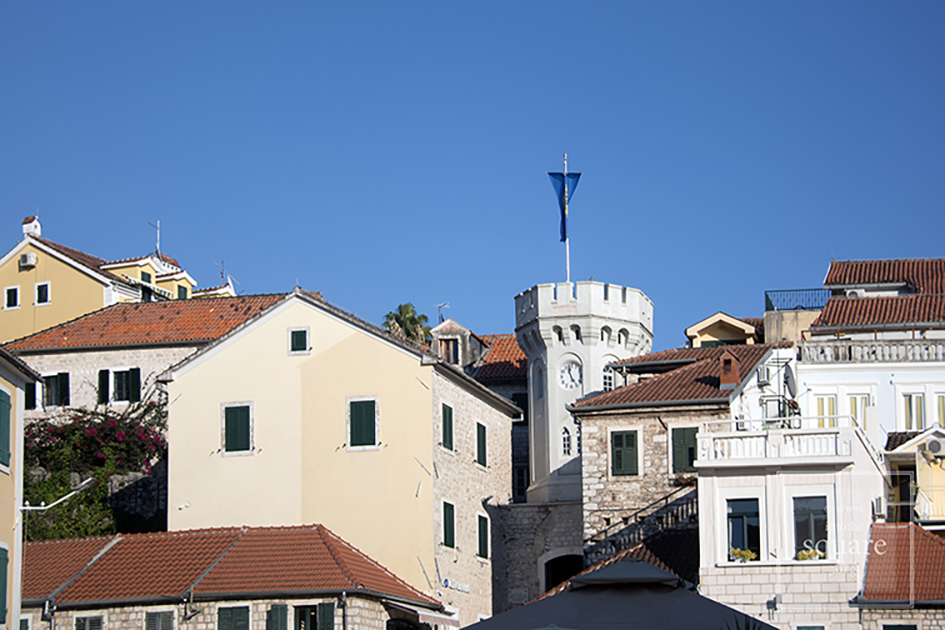
Herceg Novi (Castelnuovo in Italian) is not new as the name claims, but rather quite old, for it was founded in 1382 on the site of a fishing village by the Bosnian King Stephen I, which is also the name of this town’s central square. The Turks conquered the town in 1482 and remained there for two centuries, with a brief Spanish interlude. The town came under Venetian rule in 1687, then passed to Austro-Hungary. After that, Herceg Novi was temporarily ruled by Napoleon, the Russians, and Mussolini, and then became part of Yugoslavia. Its history, though not in its entirety, can be found in its square. It is paradoxical square, for it was built in a typically Italian style, with a splendid Orthodox church in the middle, surrounded by palm trees. Unofficially, the name of the square is Belavista. From there the sea is visible, as well as an Ottoman clock tower, a Spanish fortress, the bell tower of the Catholic church and the lower part of the city.

Náměstí Svornosti from Český Krumlov, Czech Republic

Náměstí Svornosti is a small, 45 x 60 meter square. Beautiful but unexceptional, grouping a number of houses with Renaissance façades, it has a baroque column and is bounded on one side by the arches of the old City Hall building. The town, called Krumau in German, grew around the splendid castle, whose first historical mention is encountered in a 13th century poem. The castle has always remained the focal point, whilst the square held a secondary role, which accounts for its size, also determined by its location on a bend of the Vltava river. But it too remains a key element in the fairy-tale like atmosphere of the settlement, which has become renowned across the world and, thus, invaded by far too many tourists for such a small town.

Praça Francisco Rodrigues Lobo from Leira, Portugal

This square has an important role in the social and economic life of the Leira community, for it is filled with cafes and terraces, where numerous events are organised. The square’s pavement is considered one of the most beautiful in Portugal. In medieval times, the square held seasonal fairs.

DCIM100MEDIADJI_0235.JPG

Plaza Mayor from Mogarraz, Spain

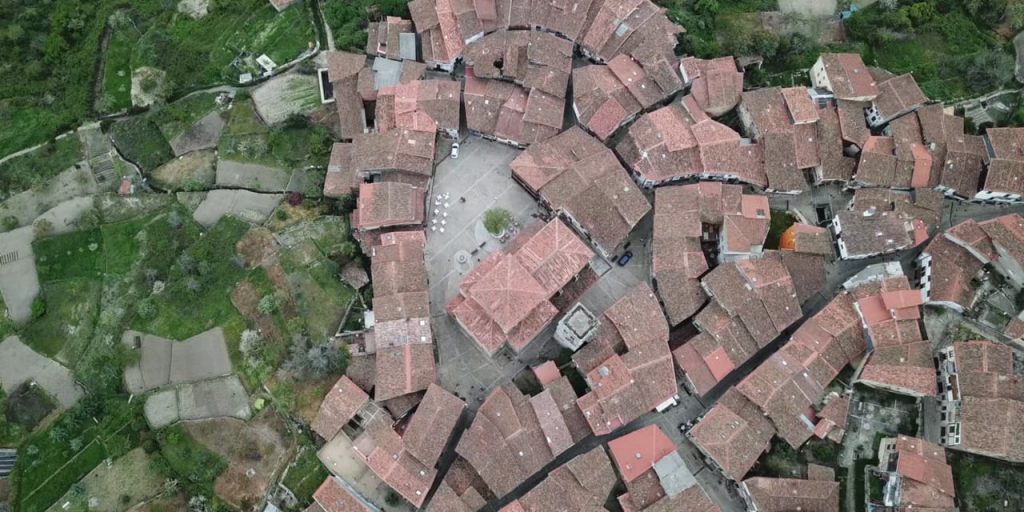
Mogarraz is a small, historic settlement in Sierra de Francia, the mountains near Salamanca. The origins of the settlement stem back to the 11th century, when it was founded by the Gascons. The village is well-known today in Spain due to the hundreds of portraits of locals, drawn on house walls by Florencio Maíllo, a local artist who began this undertaking in the 1960s, as the settlement became increasingly depopulated. Mogarraze is also interesting for its maintenance of a large part of its older architecture, and because its structure is close to the original one, with an eccentric square, and a fairy-tale atmosphere.

Plaza Nueva from Bilbao, Spania

This is a square filled with life, bars, shops, taverns, terraces, restaurants. Built between 1821 and 1851 in a neoclassical style and surrounded by identical buildings, with three levels and a colonnade, it is called Plaza Nueva, in contrast to the city’s medieval square, and measures 3400 square meters. The functionalist style of its buildings and the absence of rich decoration reflect the ideas of the Enlightenment, for the square was planned at the end of the 18th century, although its construction began a few decades later. The first architect of the square was Silvestre Pérez. The space gives one the feeling of a giant yet intimate palace salon. Every Sunday, Plaza Nueva hosts a flea market.

Tavisuplebis Moedani from Tbilisi, Georgia

A true symbol of Georgian independence, this area was named Freedom Square in 1918, during the First Georgian Republic. The name returns after the collapse of the USSR, proudly defining the country’s current identity, strengthened by the golden statue of Saint George defeating the dragon, which was placed here in 2006. It is interesting to note how the successive names of the square perfectly represent the history of Georgia in the modern age. When the square is built in the beginning of the 19th century, it is called Erevan or Ivan Paskevich Square – named after the general of the Russian Imperial Army, who conquered Erevan, eventually receiving the title of Count of Erevan. In the time of the USSR it was first called Beria Square, then Lenin Square, with a statue of Lenin dominating the centre until 1991. 

An interesting look into the dynamics of the urban network of the city: at first, when there was an intersection of trading routes with an inn, rather than a square, this area was located towards the margins of the settlement. The gradual development of the commercial margin of the city eventually becomes a centre, something encountered in many big Western European cities. An especially adventurous historical episode takes place here: in 1907, the square is the scene of a famous bank heist, organised and led by Stalin himself.

Náměstí Přemysla Otakara II from Český Budějovice, Czech Republic

This square is among the largest in Europe, and bears the name of King Ottokar II of Bohemia, who in 1256 founded the town, called Budweis in German. The Black Tower, built in the 16th century, and the Cathedral of Saint Nicholas are found in its south-eastern corner. The Baroque City Hall building lies at the opposite corner of the square, whilst its central point is occupied by Samson’s Fountain, featuring elaborate Baroque decorations. Completing the square are 48 houses with coats of arms; a beer factory; and a salt market.

The squares of Aromanian settlements from The Pindus Mountains, Greece

Legend has it that whenever they wanted to build a village, the wandering shepherds of the Pindus chose a place and planted a tree. If the tree – which they passed by at least twice yearly with their herds – grew well, they would build a settlement there, with the tree as its heart. All of the Aromanian settlements in the Pindus have a square and all of them have an ancient tree at their centre. The locals call the square the plateia, platia, mishori or mesohori. These contain all the important buildings in the life of the community. The church, the school, the fountain, the cafes, all of these are found in the square. Or, rather, they define the square. Where they are the square is as well. It is a spatial, architectural definition, but especially a social and anthropological one, for this is the place where all important community events take place. For this reason, before having an architectural definition, the square has an anthropological definition. These are not squares meant to be seen, but squares where things are meant to happen. Their main function is not aesthetic, but social. And what happens, in brief, is the story of the community, which must function as a whole.

Plaza Mayor from Cáceres, Spain

This is one of the largest squares in Spain and lies right at the entrance of the medieval town. Its origins are found in the 11thcentury, when the space was used for the great traditional holidays. The buildings are from different eras, with all of them having a 16th century ground floor colonnade. On the northwestern side, the Bujaco Tower is an eye-catching building, now a symbol of city. It was built during the Arab rule, on top of Roman foundations. The origins of its name may come from the local word for straw dolls, bujacos.

Praças da Europae e as suas histórias

A história das praças europeias está ligada por um fio histórico contínuo à antiguidade grega, onde aparece a plateia e depois a ágora. A praça urbana é específica da Europa, porque uma continuidade tão longa não está presente em outras culturas, mesmo que nessas também haja praças, algumas mesmo muito grandes. A Europa inventou a praça, desenvolveu-a como forma arquitetónica, para depois exportá-la para todo o mundo, principalmente durante o período colonial.

Enquanto nos seus primórdios a praça é um simples alargamento da estrada principal da polis grega, com o tempo, ela adquire funções comunitárias e religiosas e começa a ser embelezada. Dos gregos, a praça é assumida pelos arquitetos romanos, onde o fórum é fundamental na conceção do espaço. Após a queda do Império Romano, a vida urbana recupera na Europa apenas por volta do ano 900, quando muitos dos burgos medievais se desenvolvem por cima dos antigos assentamentos romanos, mantendo o seu plano e esquema de ruas, com o fórum transformado em praça central, tal como acontece em Zadar ou Porec, na costa dálmata.

Qualquer cidade medieval, fotografada por um drone, permite-nos ver a oposição fundamental entre a margem e o centro, porque as cidades medievais estão sempre rodeadas por muralhas. Algumas, como Óbidos, em Portugal, ainda mantêm essas fortificações intactas. A praça é um espaço amplo, opondo-se volumetricamente às sempre estreitas e sinuosas ruas das cidades. Quase obrigatoriamente, na praça medieval há uma catedral e uma fonte. Para as pequenas cidades, o papel da fonte também é funcional. Para as grandes cidades, o papel é puramente estético, a presença da fonte na praça estando ligada à tradição e ao ritual.

A existência das muralhas teve algumas consequências importantes para as cidades de toda a Europa Ocidental. Em primeiro lugar, o espaço limitado fez com que, durante séculos, a população fosse numericamente constante dentro das muralhas. Quando a população cresce, é preferível estabelecer novas cidades, em detrimento da expansão do recinto fortificado, e é por isso que a Idade Média é notável na formação de assentamentos. A construção começa sempre com o centro, com a praça, sendo o seu lugar fixado antes de mais nada. Uma segunda consequência importante da existência das muralhas: o centro permanece sempre o mesmo. Nessas comunidades, a praça está, em princípio, sobreposta ao centro geométrico. Era o espaço mais protegido e o sítio em que o inimigo chegava por último. Além disso, a entrada nas cidades é feita apenas por alguns portões. Automaticamente, todos os caminhos de entrada levam à praça central. A perspetiva aérea mostra que a praça é o ponto focal da cidade medieval. As muralhas marcam visualmente, o mais claramente possível, a oposição entre o centro e a periferia. Daí, outra consequência ao longo da evolução: quando, no alvorecer da modernidade, as muralhas são demolidas, essas cidades tendem a desenvolver-se não linearmente, mas concentricamente, adicionando uma sequência de terreno a uma estrutura já existente, estrutura ainda visível em muitas cidades europeias de hoje.

Na Renascença, a Europa herda as cidades medievais, que já não ama e as quer completamente diferentes: dentro de limites construídos, a Europa imagina outro tipo de mundos urbanos. Contudo, a época não é conhecida pela fundação de cidades verdadeiras, mas antes de cidades fictícias. No entanto, quando a teoria se transforma em prática, acontece mais como resultado de certas calamidades. A 21 de setembro de 1561, um grande incêndio alastrou a cidade de Valladolid. O infortúnio sofrido pela cidade é, para o urbanismo, uma verdadeira bênção. No lugar do espaço vazio é construída a esplêndida Plaza Mayor, até hoje uma das maiores praças de Espanha. É a primeira praça regular da Europa, hoje, injustamente, tão pouco conhecida. A sua simetria e o plano vêm-se muito bem de cima. O padrão arquitetónico e urbano estabelecido em Valladolid é adotado por muitas outras praças, atingindo a perfeição em 1729, com a Plaza Mayor de Salamanca, uma das praças mais bonitas do mundo. Só pela fotografia aérea podemos ver imediatamente que o perímetro da praça não é um quadrado, mas um trapézio. Ao nível dos olhos, a praça é percebida por qualquer passante, sem exceção, como tendo lados perfeitamente paralelos e iguais: uma subtil ilusão de ótica, cuidadosamente calculada para aprofundar a perspetiva e compensar o espaço relativamente pequeno que o arquiteto teve à disposição.

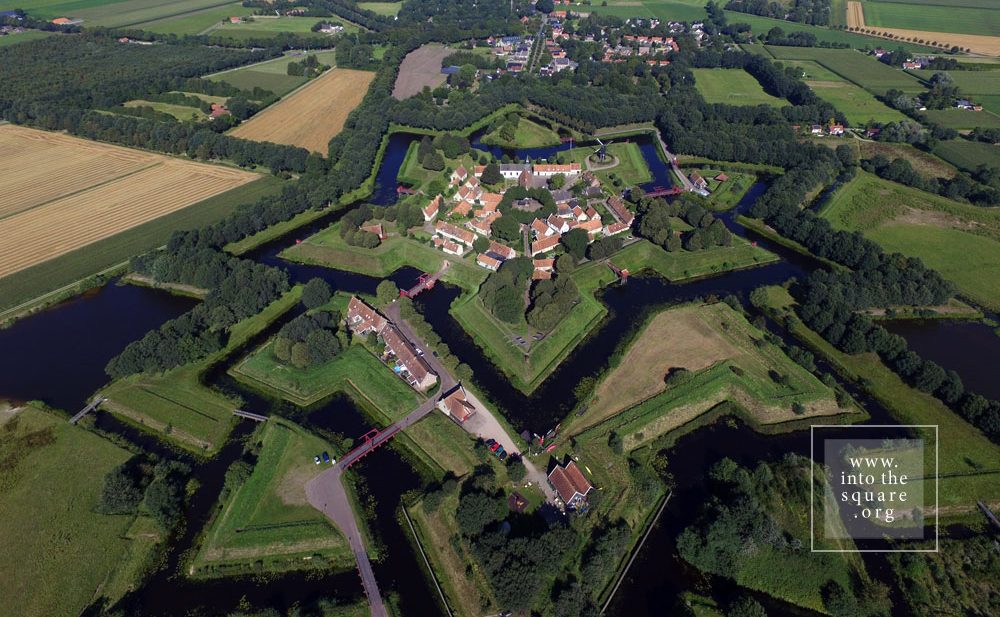
A partir do século XVI, ainda que continuem a ter fortificações, as cidades são pensadas de forma diferente. A missão de desenhar planos urbanos passa cada vez mais das mãos do artista/arquiteto para as mãos do engenheiro. O momento essencial de mudança dá-se no século XVII e está ligado ao nome de Vauban. O tipo de fortificação proposto por ele prevê o posicionamento de um grande número de soldados dentro das maciças muralhas da cidade. Os fortes em forma de estrela rapidamente se espalharam pela Europa, de Naarden e Bourtange, na Holanda, a Almeida em Portugal, ou Alba Carolina na Roménia. Essas cidades militares têm uma estrutura perfeita, com ruas retas e alinhadas, levando, obrigatoriamente, a uma grande praça, no centro. Do nível do solo, a perfeição dos fortes apenas pode ser intuída, especialmente porque os edifícios são muitas vezes austeros. No entanto, são de longe os mais belos assentamentos do continente que podem ser hoje fotografados do alto do céu, umas estrelas colocadas na Terra. Mais do que nunca, no caso dos fortes fica bem clara a importância da praça como espaço central.

Depois de meados do século XVIII e no século XIX, as cidades reinventam-se de tal maneira, que refletem as mudanças militares, tecnológicas, mas também políticas. O poder autónomo das comunidades urbanas enfraquece gradualmente, até o ponto de diminuir totalmente, em favor da autocracia dos monarcas. Os monarcas trazem os soldados para a cidade e os soldados precisam de ruas retas. Para agir rapidamente, mas também para executar lindamente os seus desfiles. Os aristocratas vivem cada vez menos nos seus palácios no campo, por quererem estar o mais perto possível dos centros políticos. Constroem as suas residências na cidade, que, com o tempo, se tornam nas suas residências principais. De repente, muitos deles ganham interesse pela aparência da cidade. Qual a consequência disso? O plano da cidade muda radicalmente. Inevitavelmente, o papel das praças e a sua relação com o resto do espaço muda também. Se os antigos assentamentos medievais têm uma estrutura baseada nas necessidades de toda a comunidade, as cidades mudam de aspeto para atender ao gosto dos aristocratas. Na área da estética urbana ocorrem transformações essenciais. Quando as ruas ficam retas, a perspetiva abre-se e as pessoas começam a ver mais longe, para além da primeira curva. Daqui para a teorização da vista é apenas um passo. A vista, desconhecida na antiguidade clássica, pressupõe uma visão urbanística muito mais complexa: os monumentos e as estátuas não devem ser vistos apenas de perto, atendendo ao facto de que são um ponto de referência mesmo quando estão no final de uma rua cumprida que, sendo reta, permite que o olhar aviste a praça de uma grande distância. O que antes era um efeito aleatório, agora está a tornar-se um elemento de estudo. Os arcos triunfais, as colunas comemorativas, as estátuas são construídas de modo a serem bonitas mesmo de longe. Daqui aos eixos cerimoniais que irão cruzar as cidades, ligando as praças, é só mais um passo. Lisboa, vista de cima, revela de relance as transformações ocorridas, sob a coordenação do Marquês de Pombal, após o devastador terramoto de 1 de novembro de 1755. As praças de Lisboa são um verdadeiro sistema. Avenidas largas e alinhadas ligam a Praça do Comércio ao Rossio, o Rossio à Figueira, ao Martim Moniz e aos Restauradores, os Restauradores à Praça do Marquês de Pombal, e todas têm no meio monumentos impressionantes.

Marktplein from Bourtange, Netherlands

Today this is a village, with 133 houses and fewer than 300 inhabitants. Yet Bourtange was built as a military fort in 1593, during the Dutch Revolt, on the orders of William the Silent. It held this role until 1851, when it officially lost its defensive function and became populated by craftsmen and farmers. Its initial purpose was to guard the road linking Spanish Groningen to Germany. It is one of the most spectacular star-shaped forts in Europe. The pentagonal plan and its network of canals and fortifications respects the original project. The square stands in the geometric middle and follows the pentagonal shape of the buildings placed within the fort. Its perimeter is perfectly defined by 14 lime trees which are over 300 years old. The square holds the most important houses: the captain’s house, the commander’s house, and the house of the school headmaster, for the placement of its buildings was hierarchical. The Protestant church dates from 1869 and, notably, is situated close to the square but not within the square itself.

Praça de São João from Almeida, Portugal

On the Portuguese side of the border there are even more fortifications than in Spain. Almeida is found in the north of Portugal. It is a star-shaped fort with 12 corners, Vauban style, built in 1641. The Spanish only entered there once in all their history, and then with the help of the French. The square is an irregular quadrilateral and is not positioned quite geometrically, just as the star is not perfect; but its role as a centre is obvious when viewed in relation to the margins of the citadel.


Praça 8 de Maio from Coimbra, Portugal

Coimbra is famous for its university, and monumental squares are located in the university area. The city also possesses a small jewel of a square, modest in size but convincing through its balanced proportions and its historical importance. It is Praça 8 de Maio, found in the city centre, in front of the monastery of Santa Cruz, while further on one finds the Câmara Municipal. This small space manages to not be dwarfed by the height and splendour of the Manueline façade of the church where the first two kings of Portugal lie buried. The buildings on the other three sides are just as visible, likewise the central fountain. The contemporary redesigning of the square also contributes to its openness.