Plaza Mayor Madriddə inşa edildikdən bir müddət sonra onun dizaynı hətta paytaxtdan çox uzaq olan digər şəhərlər tərəfindən də kopyalandı. Kordobadakı Plaza de la Korredera İspaniyanın cənubunda və Andalusiyadakı yeganə dördtərəfli bir meydandır və Salamanka memarı Antonio Ramos Valdes tərəfindən hazırlanmışdır. O, 1683-cü ildə tarixən bir Roma sirki olan və sonradan şəhərin müsəlman dövründə bir ticarət sahəsi olan bir esplanadın yerində nəhəng, bərabərtərəfli dördbucaqlı şəklində, Madriddəkindən bir az daha kiçik bir meydan inşa etdi. İnşaat bitdikdən sonra meydan müvəqqəti ticarət yarmarkalarından tutmuş, buğa döyüş sahəsinə qədər müxtəlif məqsədlər üçün istifadə edildi. Zəmin qatının alt hissəsindəki tağlar bitki liflərindən toxunmuş ənənəvi əşyalar satan sözdə esparterías dükanlarıdır. Antik mağazalar burada demək olar ki, bir əsrə yaxın mövcud olmuşdur.
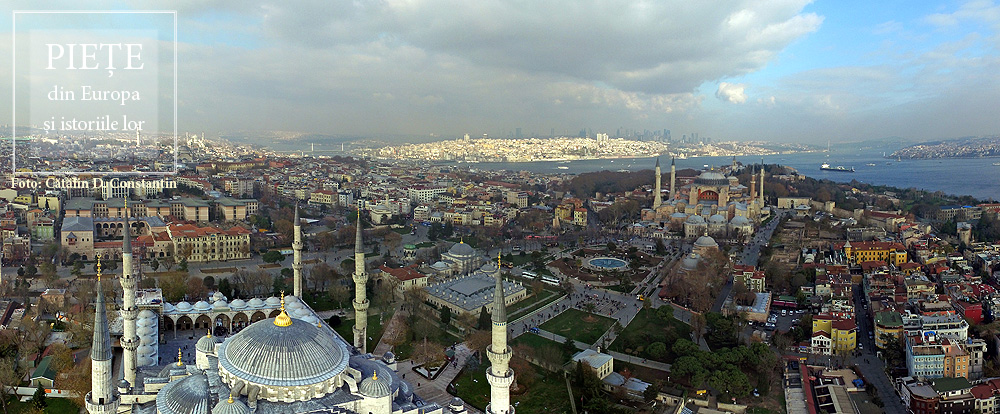
This square bears some of the ambiguity of the meeting point of the Orient and Europe. This is not a single square, but rather two squares brought together and identically named. Between the Hagia Sophia and Sultan Ahmet Camii, known as the Blue Mosque, lies a square with a fountain at its centre, often called Ayasofya Meydani, although the official name is Sultanahmet Meydani. It is a market-garden, built on the spot which held the Augusteion, the Roman forum of Augustus. Paradoxically, the long square between the Blue Mosque and the Museum of Islamic Art keeps the name Sultanahmet Park, although it is less of a park than the neighbouring square. There is no place in the world that brings together so much history. The obelisk of Theodosius the Great is, in fact, Egyptian, and was brought here in 390, from Luxor. Sculpted in Aswan granite, it was built in 1490 B.C. for the Egyptian pharaoh Thutmose III. The serpentine column was brought in 324 to the temple of Apollo at Delphi, where it celebrated the victory of the Greeks against the Persians. Cast from the alloy of the Persian weapons and melted down by the Greeks, it is now 2500 years old. Another obelisk was built in the 10th century by Constantin VII. One must also add the “German fountain” built in 1900 to mark the visit of Kaiser Wilhelm II. Then, there is the Art Nouveau façade, with the Oriental features of the building, which is now houses the rectorship of Marmara University. The Blue Mosque and the Hagia Sophia define a side of the square. On the opposite side, the Museum of Islamic Art is found in the palace of Ibrahim Pasha, the vizier of Suleyman the Magnificent. A marble column marks the kilometre zero of the Eastern Roman Empire, still visible in the north-eastern corner of the square. And that is not all. The square is, in fact, the arena of the Roman hippodrome.
Yuxarıdan baxıldığında qədim şəhər olan Split (italyanca „Spalato”) dağınıq binaları, küçələri və bazarları olan düzbucaqlı bir qutu kimi görünür. İstehkamın ən böyük bazarlarından ikisi Orta Əsrlərdən bu yana şəhərin tarixində əsas rol oynamışdır. „Narodni trg” (Xalq Meydanı), yerlilər üçün isə sadəcə Pjaca adlanan bu yer haqqında 13-cü əsrdə çoxdan bəhs edilmişdi və çox sayda qotik üslubuna aid binalara malikdir. Bir az daha irəlidə özünün qədimliyini və rəngarəngliliyini xatırladan, meyvə bazarı anlamına gələn və yerli xalq tərəfindən qısaca „Voćni trg” (Meyvə Meydanı) olaraq adlanan „Trg Braće Radić” (Meyvə Meydanı) yer alıb. Orta əsr divarlarının xaricində üçüncü böyük meydan isə Respublika Meydanıdır ki, daha yenidir və özünün memarlıq üslubu ilə Venesiyadakı San Markonu xatırladır. Split şəhərindəki meydanlardan ən qədimi və ən maraqlısı „ Trg Peristil”dir ki (Peristil Meydanı), sahəsinə görə daha kiçikdir və hələ də yerli əhali tərəfindən bölgənin tarixi ürəyi hesab edilir. Əvvəllər meydan 305-ci ildə Roma imperatoru Diokletian üçün tikilmiş sarayın daxili həyəti idi. Əslində, qədim Split şəhərinin yarısı zamanımıza qədər çox yaxşı qorunub saxlanılan Roma sarayının saray divarlarının içərisindədir.